Introduction
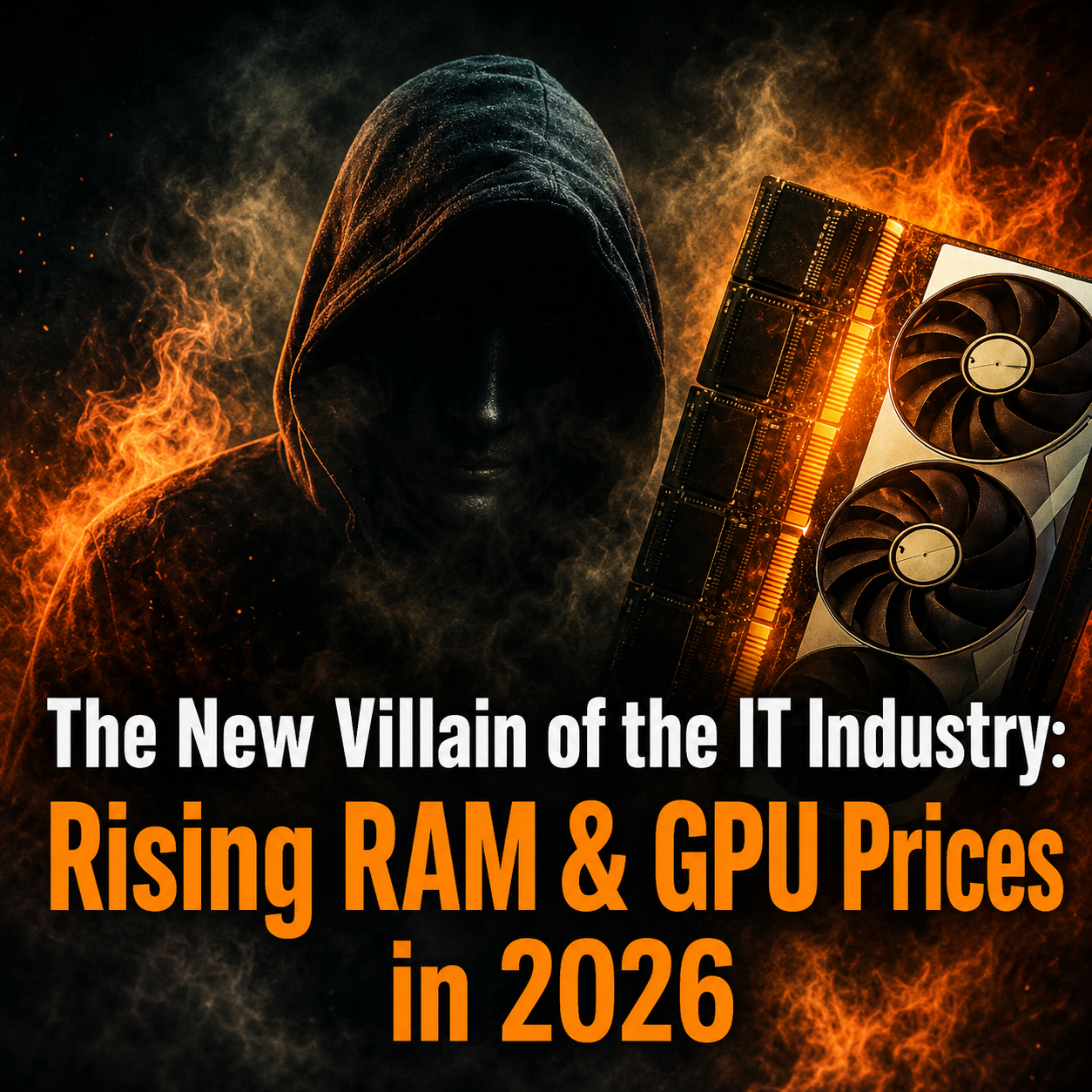
Every industry faces challenges. However, in 2026, the IT sector has a new and serious one. Rising RAM and graphics card prices are quickly becoming a major concern for businesses planning infrastructure upgrades.
As a result, hardware budgets are under pressure across enterprise servers and high-performance AI workstation and GPU server solutions. So, what is driving this surge? More importantly, how should businesses respond?
Why RAM Prices Are Climbing Again
The increase in RAM pricing is closely linked to global semiconductor supply adjustments. In recent quarters, memory manufacturers reduced production after previous oversupply cycles. Consequently, market conditions have tightened.
According to industry analysis from TrendForce, DRAM manufacturers have reduced production output after previous oversupply cycles, leading to tighter market conditions. At the same time, demand from AI servers, virtualization environments, and cloud infrastructure continues to rise.
At the same time, demand from AI servers, virtualization environments, and cloud infrastructure continues to grow. Therefore, when supply decreases and demand increases, prices inevitably rise.
In addition, higher energy costs and global logistics challenges have further increased semiconductor manufacturing expenses. As a result, enterprises expanding server capacity are now facing higher procurement costs than in previous years.
GPUs: The Real Game Changer
Meanwhile, graphics cards are facing even stronger pressure.
Today, GPUs are no longer limited to gaming or creative design. Instead, they power:
Enterprise Rendering Workloadsnd for GPUs driven by AI infrastructure expansion across global data centres. This surge is tightening supply chains worldwide.
Artificial Intelligence
Machine Learning
Data Analytics
Engineering Simulation
According to reports from Reuters, AI infrastructure expansion across global data centres has significantly increased GPU demand. Consequently, supply chains are tightening worldwide.
Technology analysts at Tom’s Hardware have also noted upward pricing pressure as advanced GPU architectures require more complex and expensive fabrication processes.
The result is simple: higher demand, limited advanced chip production capacity, and increasing prices.increase production costs, further pushing prices upward.
How This Impacts Business IT Budgets
For businesses planning:
- Server memory expansion
- Workstation upgrades
- Data centre scaling
- AI deployment projects
The pricing surge directly affects capital expenditure.
In many cases, hardware costs have increased depending on configuration and vendor availability. Moreover, delayed procurement may expose organizations to even higher pricing if supply constraints continue.
For IT leaders, this is not just a temporary fluctuation. Instead, it represents a strategic planning challenge.ge.
Smart Strategy: Plan Before Prices Climb Further
Rather than reacting to market shocks, businesses should adopt proactive procurement strategies.
For example, companies can:
- Plan infrastructure upgrades early
- Lock vendor pricing in advance
- Design scalable configurations
- Avoid last-minute emergency purchases
- Consult experienced IT infrastructure partners
By planning ahead, organizations can reduce financial risk while maintaining performance and long-term scalability.
Conclusion
The rise in RAM and GPU prices is the new reality of the IT industry in 2026. Backed by AI-driven demand, controlled semiconductor production, and increasing enterprise adoption, this “new villain” is reshaping hardware investment decisions.
Businesses that plan strategically will remain protected. Those that delay may face higher costs and limited availability.
In today’s evolving IT landscape, preparation is the strongest defense.
For organizations planning performance upgrades, scalable infrastructure, or GPU-intensive deployments, a structured approach becomes critical. Kirti Telnet supports enterprises with optimized computing and high-end workstation solutions designed to balance performance, scalability, and cost efficiency even in volatile hardware markets.
By aligning hardware strategy with long-term business goals, companies can stay competitive despite rising component prices.